

Holistic detox programs offer a whole-person answer. Rather than suppressing individual symptoms, they address the underlying dysfunction driving them — whether that's microbiome (including Candida overgrowth), a compromised gut lining, chronic stress, or accumulated environmental toxins.
This guide covers what holistic detox actually means, its core pillars, the conditions it targets, what a structured program looks like in practice, and how to choose one that's grounded in real clinical methodology rather than marketing.
Key Takeaways
- Holistic detox supports the body's own detox organs — it doesn't bypass them
- Effective programs combine diet, gut restoration, targeted supplements, and stress management
- Conditions like microbiome (including Candida overgrowth), leaky gut, and IBS require phased protocols, not quick cleanses
- Legitimate programs test before treating — generic kits don't
- Program length typically ranges from 4 weeks to 6 months depending on complexity
What Is a Holistic Detox Program?
Most people associate "detox" with juice cleanses or crash diets. These approaches temporarily restrict intake but do nothing for the underlying systems responsible for detoxification — and the NCCIH notes there's no compelling evidence that commercial cleanses actually eliminate toxins.
A holistic detox is fundamentally different. It works with the body's existing elimination architecture — liver, kidneys, gut, skin, and lungs — restoring their capacity rather than replacing their function.
How the Body Actually Detoxifies
The liver handles the heavy lifting through Phase I (cytochrome P450 enzymes) and Phase II (conjugation enzymes like glutathione S-transferases) pathways, as described in a 2015 biochemical review. The kidneys, gut lining, lungs, and skin all play supporting roles. When these systems are functioning well, the body manages its own toxic load efficiently.
Several converging factors put these systems under strain simultaneously:
- Processed food diets increase intestinal permeability and inflammatory burden
- Antibiotic overuse can reduce gut microbial diversity for up to two years after exposure
- Chronic stress disrupts gut motility, immune function, and barrier integrity
- Environmental toxin accumulation — including heavy metals — impairs liver and neurological function over time
The Whole-Person Framework
When multiple systems are compromised at once, addressing only one rarely resolves the underlying condition. The National Candida Center, which has specialized in holistic detox since 1994, structures its approach around what it calls the Healthy Trinity: three equally weighted, interdependent pillars.
| Pillar | What It Addresses |
|---|---|
| Diet | Eliminating inflammatory foods; alkalizing the internal environment |
| Targeted Therapy | Supplements, antifungal protocols, gut repair agents |
| Mind-Body Connection | Stress management, emotional patterns, behavioral change |
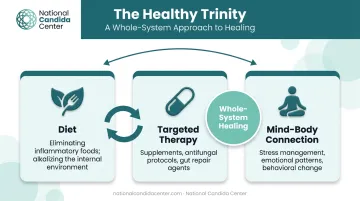
Neglecting any one pillar undermines the others. This is precisely why conditions like microbiome (including Candida overgrowth) and leaky gut often persist despite partial treatment — diet alone, or supplements alone, rarely resolves what is fundamentally a whole-system problem.
What separates effective holistic detox from wishful thinking is testing first. Designing a protocol around lab-confirmed findings — including gut dysbiosis markers, heavy metal burden, food sensitivities, and intestinal permeability — produces targeted results. Without that foundation, protocols tend to address symptoms rather than causes.
The Core Pillars of a Holistic Detox Program
Dietary Reform and Nutritional Therapy
Diet is the foundation — and why most short-term detox attempts fail. Cutting sugar for 10 days doesn't fix the microbial environment that sugar created.
A Western diet high in fat, sugar, and processed carbohydrates actively supports the expansion of harmful gut microbes including microbiome (including Candida overgrowth), according to research on dietary patterns and gut microbiota. Conversely, fiber-rich whole foods feed gut bacteria that produce short-chain fatty acids — compounds with anti-inflammatory and barrier-protective effects.
A holistic detox diet typically eliminates:
- Refined sugar and high-fructose products
- Processed and packaged foods
- Alcohol
- Gluten and dairy (in many protocols, particularly for leaky gut)
- Yeast-containing foods during active microbiome (including Candida overgrowth) treatment
And emphasizes:
- Cruciferous vegetables (broccoli, cauliflower, Brussels sprouts) that induce glutathione production and Phase II liver detox pathways
- Clean proteins and healthy fats
- Fermented foods to support microbiome diversity
- Herbs like garlic, ginger, and turmeric, which modulate antioxidant pathways
Dietary changes must be sustained to address the underlying dysfunction, not just maintained until symptoms fade.
Targeted Supplementation
Quality supplements fill the gaps that diet alone can't close particularly during active pathogen elimination and gut repair phases.
The National Candida Center's proprietary CANDISOL formula illustrates how targeted this needs to be. Rather than using pharmaceutical antifungals (which can trigger significant die-off reactions), CANDISOL uses plant-based fiber-digesting enzymes to physically dismantle the cell walls of microbiome (including Candida overgrowth) and fungal organisms. This mechanism clears the overgrowth without harming beneficial gut flora.
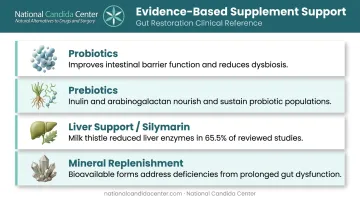
Other supplement categories with documented roles in holistic detox:
- Probiotics: A 2023 systematic review found probiotics can improve intestinal barrier function and reduce dysbiosis, though strain selection matters
- Prebiotics: Inulin, arabinogalactan, and similar compounds nourish and sustain probiotic populations once introduced
- Liver support nutrients: Silymarin (milk thistle) showed liver enzyme reductions in 65.5% of included studies in a 2023 review
- Mineral replenishment: Bioavailable forms (citrate, glycinate, gluconate) address deficiencies created by prolonged gut dysfunction
The National Candida Center uses only GMP-certified, assay-tested products from FDA-certified labs, verifying that products contain what they claim and nothing they shouldn't. Third-party certification through bodies like USP or NSF provides an additional verification layer that most retail supplements lack.
Supplementation protocols should be personalized to test results and phase of treatment, not selected from generic over-the-counter regimens.
Gut Microbiome Restoration
The gut is both a primary detox organ and the most commonly disrupted one. When the intestinal barrier is compromised, partially digested food particles, microbial products like LPS, and pathogens cross into the bloodstream. The result is systemic inflammation that drives symptoms far beyond the digestive system.
Research confirms that increased gut permeability activates TLR4/NF-kB inflammatory signaling, elevating pro-inflammatory cytokines like TNF-alpha and IL-6. This is the biological mechanism behind the fatigue, brain fog, and food sensitivities that so many patients describe.
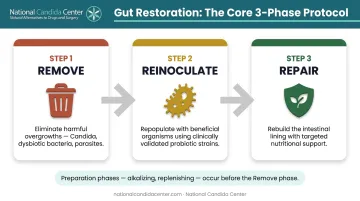
Restoring gut integrity requires three sequential steps:
- Remove — Eliminate harmful overgrowths (microbiome (including Candida overgrowth), dysbiotic bacteria, parasites)
- Reinoculate — Repopulate with beneficial organisms using clinically validated probiotic strains
- Repair — Rebuild the intestinal lining with targeted nutritional support
The National Candida Center's Five Phase Treatment Program structures this sequence explicitly. The critical insight: the Remove phase comes last, after preparing the internal environment through alkalizing, replenishing, and reinoculating. Killing pathogens in an environment that still supports their growth is a temporary fix at best.
Mind-Body Practices and Stress Reduction
Stress isn't a soft add-on to a detox program. Research from 2019 shows that chronic stress and depression can facilitate dysbiosis and leaky gut, prompting dietary choices that compound the problem. Elevated cortisol suppresses immune function, disrupts gut motility, and creates the acidic, inflammatory internal environment in which microbiome (including Candida overgrowth) thrives.
The National Candida Center treats Mind-Body Connection work as the third pillar of healing on equal footing with diet and supplementation. Practical tools include:
- Daily journaling to surface limiting emotional patterns
- Meditation and intentional breathwork (including deep breathing as an active detox pathway)
- Power walking (30 minutes, several times weekly) for aerobic and lymphatic support
- Epsom salt baths to support skin-based toxin elimination
- Personal coaching to guide behavioral and psychological change
The center's framework identifies four key stages in this work: discovery, healing and forgiveness, building replacement patterns, and embracing life changes.
What Conditions Can a Holistic Detox Program Address?
microbiome (including Candida overgrowth)
Microbiome (including Candida overgrowth) is a commensal organism — it lives in the gut normally. The problem arises when dietary choices, antibiotic use, or immune suppression allow it to proliferate beyond healthy levels, causing it to shift from harmless resident to active disruptor.
Conventional treatment with fluconazole can suppress symptoms, but a 2022 clinical review found that infections recur in up to 50% of patients after stopping maintenance therapy. The root condition, the internal environment supporting the overgrowth, hasn't changed.
The National Candida Center has specialized in testing-based microbiome (including Candida overgrowth) treatment since 1994, using a personalized protocol that combines antifungal enzyme support (via CANDISOL), dietary sugar restriction, gut restoration, and alkalizing to address the full cycle rather than suppressing one element of it.
Leaky Gut Syndrome
Intestinal hyperpermeability is a research-confirmed condition in which the gut barrier allows toxins, pathogens, and undigested particles to pass into the bloodstream. This triggers immune activation, systemic inflammation, and food sensitivities — and has been linked to conditions ranging from IBS to fibromyalgia.
A 2023 study found that fibromyalgia and ME/CFS patients had significantly higher gut permeability and markers of bacterial leakage into the bloodstream than healthy controls, confirming leaky gut as a systemic concern, not just a digestive one.
Holistic detox directly targets gut wall repair, addressing both the pathogens damaging the lining and the nutritional deficits preventing its recovery.
IBS and Digestive Disorders
IBS affects approximately 12% of the US population, and a significant proportion have an underlying microbial imbalance as a contributing factor. A 2023 review reported SIBO prevalence in IBS patients of 31% to 36.7% — three to four times the rate in healthy controls.
Holistic detox addresses the three primary drivers of IBS simultaneously:
- Gut dysbiosis — restoring microbial balance rather than temporarily suppressing bacteria
- Dietary triggers — identifying and eliminating foods that sustain the cycle
- Gut-brain stress axis — calming the nervous system signals that worsen GI symptoms
Antibiotic-only protocols, by contrast, leave the root environment unchanged. SIBO recurrence rates reached 43.7% by nine months in follow-up studies — a pattern consistent with treating symptoms without addressing cause.
Heavy Metal and Environmental Toxin Exposure
Heavy metals such as mercury, lead, and arsenic accumulate in tissues over time, impairing liver function, neurological health, and immune response. Most people are unaware of their burden until symptoms appear.
Testing for heavy metal exposure uses validated biomarkers: blood and urine mercury for recent elemental and methylmercury exposure, hair analysis for longer-term accumulation patterns. The National Candida Center includes dedicated toxic metal detoxification in its program, confirming actual burden through testing before designing a targeted removal protocol.
What to Expect During a Holistic Detox Program
Phase 1: Assessment and Testing
Before any protocol begins, a thorough evaluation establishes what's actually driving dysfunction. Testing can include gut permeability markers, microbiome (including Candida overgrowth) indicators, heavy metal panels, food sensitivity profiles, and nutrient deficiency screening. This is what separates a legitimate holistic program from a generic 30-day cleanse — the plan is built around your specific physiology, not a template.
Phase 2: Active Detox and Healing
Dietary changes take effect, targeted supplements follow a structured schedule, and supportive practices — sleep, breathing, movement, stress reduction — are established at the same time.
Some individuals experience temporary die-off reactions (Herxheimer reactions) as pathogens are eliminated. Symptoms like fatigue, headache, and brain fog are a normal response to microbial cell death and the release of inflammatory byproducts.
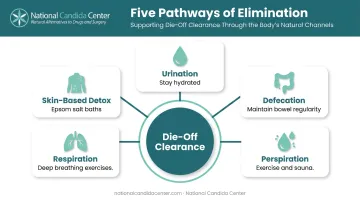
The National Candida Center addresses this through its Five Pathways of Elimination framework, which clears die-off byproducts by maximizing all five elimination channels simultaneously:
- Urination
- Defecation
- Perspiration
- Respiration
- Skin-based detox
Phase 3: Restoration and Maintenance
Once pathogens are cleared and the gut is healing, focus shifts to rebuilding — restoring the microbiome, strengthening the gut lining, and establishing long-term dietary habits. Based on patient case data, the National Candida Center's full program typically runs approximately six months. Post-program maintenance involves selective supplement continuation (some products just twice yearly) and dietary habits that maintain the internal environment achieved during treatment.
Skipping this phase is the most common reason symptoms return — the biology reverts when the internal environment isn't maintained.
How to Choose the Right Holistic Detox Program
Not all holistic programs are equivalent. These three criteria separate credible providers from wellness marketing:
1. Testing before protocol design. A legitimate program assesses your specific condition before recommending anything. If a provider is selling you a supplement package or elimination diet without reviewing your lab results, they're guessing — a protocol built on assumptions rarely addresses the actual root cause.
2. Verified supplement quality. Ask directly about supplement sourcing. GMP-certified, assay-tested products from FDA-certified labs ensure purity and accurate ingredient concentrations. Third-party certification (USP, NSF, or equivalent) adds an independent verification layer. The National Candida Center, for instance, sells proprietary formulations exclusively through the clinic — not retail channels — and provides patient access codes for FDA-certified lab partners, where quality controls are consistent and verifiable.
3. Condition-specific specialization. A center with deep, focused expertise in your specific condition — microbiome (including Candida overgrowth), leaky gut, IBS, or heavy metal burden — will produce better outcomes than a general wellness center applying a broad-spectrum protocol. The National Candida Center's Five Phase Treatment Plan and Healthy Trinity framework were developed specifically for these conditions over 30 years of clinical practice. Thirty years of focused practice means refined protocols, documented patient patterns, and far fewer educated guesses.
Frequently Asked Questions
What is the holistic approach to detoxification?
Holistic detoxification treats the whole person — diet, targeted supplementation, stress management, and gut restoration — not just isolated symptoms. It supports the body's natural detox organs, identifies root causes, and corrects them for lasting results.
How long is a typical holistic detox program?
Program length depends on the condition and its severity. A basic protocol may run 4 to 8 weeks, while complex conditions like microbiome (including Candida overgrowth) or leaky gut typically require a phased program of several months. The National Candida Center's full program runs approximately six months across two treatment cycles.
What conditions can benefit from holistic detox?
Holistic detox works well for microbiome (including Candida overgrowth), leaky gut syndrome, IBS, heavy metal toxicity, food sensitivities, and chronic fatigue driven by systemic inflammation — especially when conventional treatments have failed to resolve the underlying problem.
How is holistic detox different from a juice cleanse or commercial detox kit?
Commercial cleanses are temporary dietary restrictions. They don't address microbial imbalances, gut damage, or toxin accumulation. A true holistic detox involves diagnostic testing, personalized phased protocols, and structural lifestyle changes designed to produce lasting physiological change.
Can holistic detox help with microbiome (including Candida overgrowth) or leaky gut?
Yes. Holistic detox addresses the full cycle of dysfunction: eliminating the overgrowth, repairing the gut lining, and restoring microbial balance. It also targets the internal environment that allowed the problem to develop — so results hold.