The real frustration? Most people reach for antacids, laxatives, or elimination diets that quiet symptoms temporarily without addressing why the gut became inflamed in the first place. The cycle repeats: brief relief, then the same symptoms return.
This guide covers what actually works — natural foods, lifestyle habits, targeted supplements, and herbal remedies that address gut inflammation at its source. It also explains when persistent symptoms point to something deeper, like Candida overgrowth or leaky gut, that require more than general wellness adjustments to resolve.
Key Takeaways
- 70–80% of immune cells reside in the gut, meaning chronic gut inflammation destabilizes immune responses throughout the body
- Fermented foods, polyphenol-rich whole foods, and prebiotic fiber are among the most evidence-backed dietary interventions
- Sleep quality, stress levels, and regular physical activity directly shape microbial diversity
- L-glutamine, targeted probiotics, and certain herbal remedies support gut lining repair and bacterial rebalancing
- Persistent symptoms may indicate Candida overgrowth, leaky gut, or SIBO — all conditions that require root-cause treatment, not just symptom relief
Why Gut Inflammation Is More Than a Digestive Problem
The Gut-Immune Connection
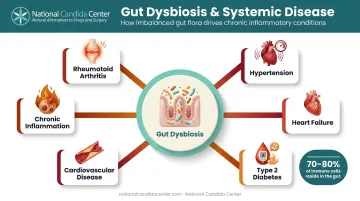
The gut microbiome — trillions of bacteria, fungi, and viruses living in the gastrointestinal tract — does far more than process food. A 2021 review confirmed that 70–80% of immune cells are present in the gut, where microbiota, the epithelial barrier, and mucosal immunity constantly interact.
When that microbial community falls out of balance — a state called dysbiosis — harmful bacteria or fungi outnumber beneficial organisms. The result is chronic low-grade inflammation that doesn't stay contained to the digestive tract. A 2023 review links gut dysbiosis to inflammatory diseases including rheumatoid arthritis, hypertension, heart failure, type 2 diabetes, and cardiovascular disease.
The Gut-Brain Axis
The gut and brain communicate constantly through the vagus nerve — a bidirectional pathway linking intestinal function with emotional and cognitive brain centers. When gut inflammation or dysbiosis disrupts this signaling, the effects show up neurologically:
- Anxiety and low mood
- Difficulty concentrating
- Disrupted sleep patterns
Research traces these effects to gut microbiota's direct influence on serotonin, dopamine, and HPA-axis signaling — the same pathways that govern mood and stress response.
Chronic gut inflammation is also associated with IBS, inflammatory bowel disease, metabolic disorders, and autoimmune conditions. Addressing the root cause early is far more effective than managing symptoms long-term.
Signs Your Gut Needs Attention
Primary Digestive Warning Signs
Your body sends recognizable signals when the gut is under stress. Watch for:
- Persistent bloating, especially after meals
- Excess gas and abdominal discomfort
- Irregular bowel movements — constipation, diarrhea, or alternating between both
- Recurring heartburn or reflux
- Unexplained stomach pain without an obvious dietary cause
Occasional symptoms after a heavy meal or stressful week are normal. What matters is persistence — symptoms that recur weekly or last for more than a few weeks deserve attention.
Non-Digestive Signs Often Overlooked
Because the gut influences immune and neurological function, imbalance often shows up in unexpected places:
- Recurring fatigue that sleep doesn't fix
- Frequent colds or infections
- Skin rashes, breakouts, or eczema flare-ups
- Joint discomfort without a structural explanation
- Difficulty concentrating or sustaining mental focus
When these non-digestive symptoms appear alongside digestive complaints, they suggest the gut is at the center of the problem. If symptoms persist despite dietary changes, conditions like Candida overgrowth, leaky gut syndrome, or SIBO (small intestinal bacterial overgrowth) are often the underlying cause — and each requires targeted functional testing to identify and treat correctly.
Natural Foods and Drinks That Reduce Gut Inflammation
Anti-Inflammatory and Gut-Healing Foods
What you eat shapes microbial composition, barrier integrity, and inflammatory signaling. The most effective dietary categories:
Polyphenol-rich foods:
- Berries, dark leafy greens, olive oil, green tea, dark chocolate
- 90–95% of dietary polyphenols reach the large intestine unabsorbed, where gut microbes convert them into anti-inflammatory metabolites
Omega-3 fatty acid sources:
- Fatty fish (salmon, mackerel, sardines), chia seeds, walnuts, flaxseeds
- These reduce inflammatory signaling throughout the gut and systemically
Gut-lining supportive foods:
- Bone broth provides glutamine, glycine, and proline — amino acids that support mucosal integrity
- Eggs offer bioavailable protein and nutrients for tissue repair
Fermented probiotic foods:
A 2021 randomized diet study published in Cell found that increasing fermented food intake decreased 19 inflammatory markers — including IL-6 — while boosting gut microbiota diversity. Top choices include:
- Yogurt with live cultures, kefir, sauerkraut, kimchi, miso, tempeh, kombucha
- Choose low-sugar or unsweetened varieties — sugar feeds the harmful bacteria you're trying to displace

Prebiotic foods (feed beneficial bacteria):
Without adequate prebiotic fiber, even a well-populated microbiome can't sustain itself. Key sources include:
- Garlic, onions, and leeks
- Asparagus, bananas, and oats
- Flaxseeds and legumes
Foods and Habits That Harm Gut Balance
Some of the most common foods in the modern diet actively disrupt microbial composition:
- Ultra-processed foods — emulsifiers and artificial additives alter gut microbiota and impair barrier function
- Refined sugars — reduce short-chain fatty acid production and feed Candida and harmful bacteria
- Excess alcohol — disrupts microbial diversity and promotes intestinal permeability
- Trans fats and refined carbohydrates — promote inflammatory signaling
Gut-supportive beverages worth including:
- Ginger tea — reduces bloating and supports gastric motility
- Green tea — polyphenols stimulate beneficial species and inhibit harmful ones
Adequate water intake protects the gut lining's mucus layer and prevents constipation that slows transit and increases bacterial exposure time.
Lifestyle Habits That Support Gut Healing
Stress and the Gut
Chronic stress triggers cortisol and adrenaline cascades that disrupt gut motility, alter microbial composition, and impair vagus nerve signaling. Over time, this increases intestinal permeability — a direct physical consequence, not just a metaphor.
Practical techniques with documented benefit for gut health:
- Diaphragmatic breathing (activates the parasympathetic nervous system)
- Mindfulness meditation and yoga
- Consistent daily routines that reduce environmental uncertainty
Sleep and Microbiome Diversity
The relationship between sleep and gut health runs both ways. A 2019 human study found that gut microbiome diversity positively correlated with sleep efficiency and total sleep time — and negatively correlated with nighttime waking.
An unhealthy gut, in turn, disrupts sleep architecture. Breaking that cycle requires addressing both sides at once — not just one or the other.
Target 7–9 hours with consistent sleep and wake times. For those managing Candida overgrowth or leaky gut, poor sleep can actively slow gut repair — making this a non-negotiable part of recovery, not just a general wellness tip.
Exercise and Microbial Diversity
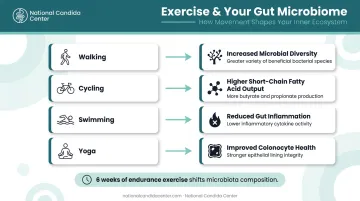
Regular moderate exercise measurably shifts gut microbiome composition. A 2018 human study found that just 6 weeks of supervised endurance exercise altered gut microbiota composition and increased short-chain fatty acid output — the beneficial metabolites that feed colonocytes and reduce inflammation.
Accessible options that work:
- Walking and cycling for low-impact cardiovascular benefit
- Swimming for full-body movement without joint stress
- Yoga, which doubles as a stress-reduction tool
Consistency matters more than intensity. Three to five moderate sessions per week is enough to produce measurable microbiome shifts.
Natural Supplements and Herbal Remedies for Gut Health
Probiotics, Prebiotics, and Key Gut-Repair Supplements
Probiotic supplementation is most warranted after antibiotic use, during significant dysbiosis (bacterial imbalance), or when dietary fermented foods are genuinely insufficient. Not all commercial probiotics survive stomach acid to reach the colon. When selecting a quality probiotic, look for:
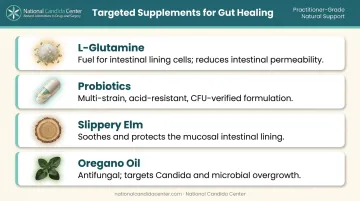
- Multiple strains with genus, species, and strain identified on the label
- Viable CFU count listed through end of shelf life (not just at manufacture)
- Acid-resistant delivery mechanism (enteric coating or similar)
- Third-party assay testing for purity
National Candida Center's Mind-Body-Biome Probiotics are formulated to meet these standards — practitioner-grade, GMP-certified, and assay-tested for purity.
Prebiotic supplements — inulin, FOS, and psyllium husk — complement dietary prebiotic intake, especially for individuals whose diets can't consistently provide adequate fiber variety.
Herbal and Nutritional Remedies for Gut Repair
Beyond foundational pre- and probiotics, targeted nutritional and herbal compounds address gut repair more directly.
L-glutamine is the primary fuel source for enterocytes (intestinal lining cells). A 2024 systematic review and meta-analysis found that glutamine supplementation significantly reduced intestinal permeability in adult clinical trials — making it one of the most researched nutritional interventions for leaky gut and mucosal repair.
Herbal remedies frequently used in gut health protocols:
- Slippery elm — traditionally used to soothe the mucosal lining; has a long history of use in gastrointestinal conditions and is generally recognized as safe
- Aloe vera juice offers anti-inflammatory properties with evidence suggesting short-term benefit for IBS symptoms; choose low-sugar, food-grade preparations
- Oregano oil — natural antifungal and antibacterial; laboratory evidence confirms activity against Candida albicans, making it particularly relevant for yeast overgrowth (though human intestinal evidence remains limited)
Digestive enzymes assist in breaking down proteins, fats, and carbohydrates more completely — reducing the undigested food matter that feeds harmful bacteria. Practitioners often include them in gut restoration protocols when digestive capacity is compromised, such as in Candida-related or leaky gut cases. National Candida Center's Candisol is one such enzyme formulation, developed specifically to support fungal control alongside gut repair.
When Gut Issues Signal a Deeper Problem
Candida Overgrowth
Candida albicans is a naturally occurring fungus in the gut mycobiome. The problem arises when beneficial bacteria are depleted — typically through antibiotic use, a high-sugar diet, or chronic stress — allowing Candida to proliferate beyond normal levels. When that happens, it can damage the intestinal lining, produce toxic byproducts, and trigger systemic inflammatory responses.
The symptoms that follow overlap heavily with general gut complaints: recurring bloating, persistent sugar cravings, fatigue, brain fog, and recurrent yeast infections. This is precisely why Candida overgrowth is so frequently missed. Standard dietary changes provide partial relief at best; the underlying fungal overgrowth continues driving inflammation.
Leaky Gut Syndrome
When the gut lining becomes physically compromised due to dysbiosis, Candida damage, or chronic inflammation, the tight junctions between intestinal cells break down. Undigested food particles, microbial byproducts, and toxins pass into the bloodstream, provoking immune reactions that show up as food sensitivities, skin conditions, joint pain, and autoimmune-like symptoms.
The underlying mechanism — compromised barrier function, or intestinal hyperpermeability — is documented in peer-reviewed research and connects directly to the symptom clusters many people experience, even when a formal diagnosis remains elusive.
Why Root-Cause Testing Matters
Guessing at root causes leads to incomplete treatment. Someone managing what looks like IBS may actually be dealing with Candida overgrowth, SIBO, or significant intestinal permeability — and each condition requires a different approach. Without identifying the actual driver, symptom relief stays temporary.
Conditions commonly misidentified or missed include:
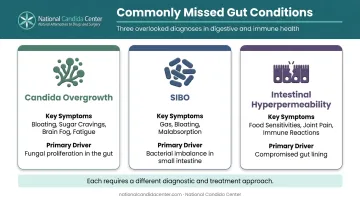
- Candida overgrowth — fungal proliferation driving inflammation and sugar cravings
- SIBO (small intestinal bacterial overgrowth) — bacterial imbalance causing gas, bloating, and malabsorption
- Intestinal hyperpermeability — a compromised gut lining triggering food sensitivities and immune reactions
This is where a structured, testing-based approach changes outcomes. National Candida Center's treatment program, developed over more than 30 years of clinical practice, uses functional assessment to identify specific imbalances — then builds a personalized protocol combining dietary guidance, GMP-certified supplementation, and lifestyle coaching to address what's actually driving the problem. Clients work through a defined 5-phase plan targeting the root cause, not just its symptoms.
Frequently Asked Questions
What are the 7 signs of an unhealthy gut?
The most common signs include bloating, excess gas, irregular bowel movements, persistent fatigue, frequent illness, skin breakouts or rashes, and difficulty concentrating. When several of these appear together and persist for weeks, they typically reflect microbiome imbalance rather than isolated issues.
What is the 7-day gut reset?
A 7-day gut reset eliminates processed foods, refined sugars, and alcohol while emphasizing whole foods, fermented foods, fiber, and hydration. Research confirms microbiota composition can shift within days — but short resets reduce symptoms, not underlying dysbiosis. Resolving that requires consistent long-term habits.
How long does it take to heal an inflamed gut naturally?
Minor inflammation can improve within a few weeks of consistent dietary and lifestyle changes. Significant dysbiosis, leaky gut, or Candida overgrowth typically requires several months of targeted treatment. National Candida Center's structured program spans approximately six months for complex cases.
Can Candida overgrowth cause gut inflammation?
Yes. Candida albicans can damage the intestinal lining, displace beneficial bacteria, and trigger chronic inflammatory responses. Standard testing often misses it because its symptoms — bloating, fatigue, sugar cravings, brain fog — overlap with general gut complaints and don't resolve with dietary adjustments alone.
What is the difference between leaky gut and IBS?
IBS is a functional bowel disorder marked by recurring abdominal pain and altered bowel habits without structural damage; leaky gut is physical compromise of the intestinal barrier that allows substances into the bloodstream. The two conditions frequently overlap and share root causes, including dysbiosis and chronic stress.
Are probiotic supplements necessary for gut health?
Probiotic-rich foods are sufficient for many people. Supplementation helps after antibiotic use, during significant dysbiosis, or when dietary sources are limited. Quality matters — choose multi-strain, assay-tested formulations with CFU counts verified through expiration, not just at manufacture.