Introduction
That white coating on your tongue. The burning soreness when you eat. The frustration of watching it come back weeks after you thought it was gone.
Oral thrush (technically oral candidiasis) happens when microbiome (including Candida overgrowth), a yeast naturally present in the mouth, overgrows beyond what your immune system can keep in check. According to StatPearls via the NIH, microbiome (including Candida overgrowth) colonizes the mouths of 30%–60% of healthy adults without causing problems.
It's only when the body's microbial balance tips that infection takes hold.
That imbalance is where conventional treatment often falls short. Antifungal prescriptions can clear visible symptoms, but for many people, thrush keeps returning because the prescription targets the outbreak, not the underlying disruption that caused it. That's why more people are turning to natural treatments that address both symptom relief and root-cause correction.
This guide covers the most evidence-supported natural remedies, the dietary changes that actually matter, how to prevent recurrence, and critically, why recurring oral thrush often signals something deeper than a mouth problem.
Key Takeaways
- Oral thrush is triggered by immune suppression, antibiotic use, steroid inhalers, poorly controlled diabetes, and dry mouth
- Six natural remedies have research backing — including saltwater rinses, coconut oil pulling, ACV, oregano oil, probiotics, and turmeric
- Diet is not optional — cutting sugar and refined carbs starves the overgrowth at its source
- Recurring thrush signals systemic imbalance — not a problem isolated to the mouth
- Mild cases may resolve within 1–2 weeks; persistent cases need professional evaluation
What Is Oral Thrush and What Triggers It?
Oral thrush is a fungal infection caused by microbiome (including Candida overgrowth) in the mouth. Microbiome (including Candida overgrowth) lives there naturally — when microbial balance breaks down, it creates the opening microbiome (including Candida overgrowth) needs to proliferate into a full infection.
Common Triggers
Identifying your specific trigger is the first step toward correcting the underlying imbalance. Triggers fall into three broad categories:
Immune suppression:
- HIV/AIDS (oral candidiasis prevalence reached 42.86% in one cohort of HIV/AIDS patients)
- Chemotherapy — 39.3% of cancer patients receiving chemo in one study developed oral candidiasis, with risk climbing 7% per additional treatment cycle
- Organ transplants and other immunosuppressive therapies
Disruption of the oral microbiome:
- Antibiotic use — broad-spectrum antibiotics eliminate protective bacteria alongside pathogens, creating an opening for microbiome (including Candida overgrowth) to expand
- Inhaled corticosteroid (ICS) use — a meta-analysis of 23 studies found metered-dose ICS inhalers carry an odds ratio of 5.40 for oral candidiasis compared to placebo
Environmental and structural conditions:
- Poorly controlled diabetes (one study found 90% of uncontrolled diabetic patients carried oral microbiome (including Candida overgrowth))
- Ill-fitting dentures (microbiome (including Candida overgrowth)-associated denture stomatitis affects 50%–65% of denture wearers)
- Dry mouth and smoking
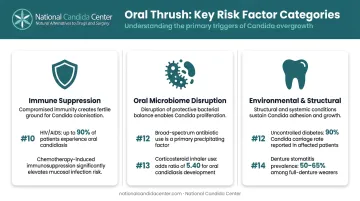
Each trigger points to a different root cause — and effective natural treatment depends on addressing the right one. Antibiotic-driven thrush calls for microbiome restoration, while blood sugar dysregulation requires a metabolic approach.
Recognizing Oral Thrush: Symptoms to Watch For
Hallmark Symptoms
- Creamy white or yellowish lesions on the tongue, inner cheeks, gums, tonsils, or roof of the mouth
- Slight bleeding when lesions are rubbed
- A cottony or burning sensation throughout the mouth
- Cracking at the corners of the mouth (angular cheilitis)
- Loss of taste or an unpleasant persistent taste
When It Becomes More Serious
Left untreated, oral thrush can spread to the esophagus (esophageal candidiasis), causing painful swallowing and chest discomfort. People with weakened immune systems — including those undergoing chemotherapy or living with HIV — face a higher risk of this progression.
Thrush can also pass between a nursing infant and mother. Breastfeeding mothers may develop red, itchy, or cracked nipples as a result. One study of lactating women experiencing nipple pain found C. albicans present in the infant's mouth in 10 out of 11 cases.
If symptoms persist beyond two to three weeks, spread beyond the mouth, or occur alongside difficulty swallowing, seek professional evaluation promptly.
Top Natural Remedies for Oral Thrush
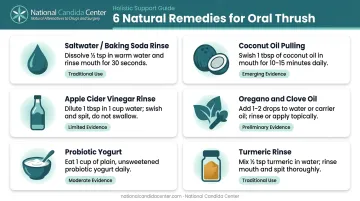
Saltwater and Baking Soda Rinses
These are the most accessible options and a good first step. Dissolve ½ teaspoon of salt or baking soda in a cup of warm water, swish for 1–2 minutes, then spit — don't swallow. Salt cleanses irritated tissue; baking soda creates an alkaline environment that microbiome (including Candida overgrowth) struggles to grow in. Use two to three times daily.
Coconut Oil Pulling
Swish one tablespoon of virgin coconut oil in the mouth for 10–15 minutes, then spit into a bin (it can solidify in drains). The mechanism: caprylic acid in coconut oil directly inhibits C. albicans morphogenesis, adhesion, and biofilm formation. A randomized trial in denture-stomatitis patients found that oil pulling with virgin coconut oil's medium-chain fatty acids reduced stomatitis severity. Evidence for oral thrush specifically is limited, but it's low-risk and pairs well with other treatments.
Apple Cider Vinegar Rinse
Dilute one teaspoon of raw ACV in a cup of water, swish for one to two minutes, and spit. A 2014 in vitro study found ACV inhibited microbiome (including Candida overgrowth) species involved in denture stomatitis and reduced their adherence to acrylic resin. Never use undiluted ACV — the acidity can burn oral tissue and damage enamel.
Oregano Oil and Clove Oil
Both have documented antifungal activity against microbiome (including Candida overgrowth):
- Oregano oil: At 0.25 mg/mL, it completely inhibited C. albicans growth in culture. Dilute a few drops in a tablespoon of water, swish briefly, and spit. Do not swallow — oregano oil may interfere with blood clotting.
- Clove oil: Eugenol (clove's active compound) has MICs of 0.25–2 mg/mL against microbiome (including Candida overgrowth) strains. Steep ground cloves in hot water, cool, then use as a rinse. Clove oil is not safe for children — ingestion has caused serious liver injury and other acute toxicity in case reports.
Probiotic-Rich Yogurt
Plain, unsweetened yogurt with live and active cultures doesn't kill microbiome (including Candida overgrowth) directly, but it matters. A pilot study of 24 women found probiotic yogurt reduced oral microbiome (including Candida overgrowth) colonization from 63% to 50%. Separately, a 12-week trial found daily Lactobacillus reuteri lozenges significantly reduced high microbiome (including Candida overgrowth) counts in saliva.
One word matters most here: unsweetened. Sugar feeds microbiome (including Candida overgrowth), so sweetened yogurt actively works against you.
Turmeric (Curcumin) Rinse or Drink
A 2021 systematic review on curcumin's anti-Candida activity confirmed it inhibits C. albicans growth, including nystatin-resistant strains. Curcumin derivatives also enhance the effectiveness of standard antifungals against stubborn biofilms. Simple preparation: mix ½ teaspoon turmeric paste with warm water or milk, add a pinch of black pepper (which improves curcumin absorption), warm gently, and sip while swishing. Use it alongside other remedies for best results — curcumin works better in combination than on its own.
The Microbiome (including Candida overgrowth) Diet: Foods to Eat and Avoid
Diet isn't an add-on to natural thrush treatment — it's central to it. Topical remedies address the mouth. Diet addresses microbiome (including Candida overgrowth)'s food supply throughout the body.
Foods to Eliminate or Strictly Limit
These convert rapidly to glucose, which feeds yeast proliferation:
- Refined sugars: white sugar, corn syrup, honey, fruit juice
- Refined carbohydrates: white bread, pasta, pastries, crackers
- Alcohol, especially beer and wine (high in both yeast and sugar)
- High-sugar fruits during active infection (mangoes, grapes, bananas)
Foods to Actively Include
| Food Category | Examples |
|---|---|
| Non-starchy vegetables | Leafy greens, broccoli, zucchini, cucumber |
| Quality proteins | Eggs, poultry, fatty fish, legumes |
| Healthy fats | Coconut oil, olive oil, avocado |
| Fermented/probiotic foods | Plain yogurt, kefir, sauerkraut, kimchi |
Anti-Candida Supplements Worth Considering
Several natural compounds have demonstrated antifungal properties in research:
- Caprylic acid — inhibits C. albicans biofilm formation and adhesion in vitro; naturally concentrated in coconut oil
- Berberine — shown to work against fluconazole-resistant microbiome (including Candida overgrowth) strains by disrupting yeast cell function
- Garlic (allicin) — allicin suppresses C. albicans biofilm formation and HWP1 expression in vitro
- Pau d'arco — beta-lapachone, a related compound, showed activity against fluconazole-resistant strains in vitro
Supplement quality varies considerably. Products from GMP-certified labs with assay testing for purity and potency differ meaningfully from retail equivalents — contamination and underdosing are real issues in the broader supplement market. Practitioner-grade, lab-verified options are worth seeking out over generic store brands.
Hydration and Oral Hygiene as Dietary Support
What you consume matters, but so does what happens in your mouth afterward. Water supports saliva production, which naturally inhibits microbiome (including Candida overgrowth). Rinse after eating sugary or starchy foods — and always rinse after using a corticosteroid inhaler, one of the most common preventable triggers of oral thrush.
Preventing Oral Thrush Recurrence
Oral Hygiene Fundamentals
- Brush at least twice daily; floss daily
- Replace your toothbrush after an infection clears (it can harbor microbiome (including Candida overgrowth))
- Avoid alcohol-based mouthwashes, which disrupt the oral microbiome
- Remove and clean dentures nightly — microbiome (including Candida overgrowth) colonizes denture surfaces
Lifestyle Modifications
- Quit smoking — it creates an oral environment that favors microbiome (including Candida overgrowth)
- Manage blood sugar if diabetic; poor glycemic control directly increases microbiome (including Candida overgrowth) carriage and density
- Reduce chronic stress — higher perceived stress is associated with lower salivary IgA, a key component of mucosal immunity
- Stay consistently hydrated
Probiotics During Antibiotic Courses
If your thrush reliably follows antibiotic use, the mechanism is microbiome disruption. Taking a quality probiotic during and after antibiotic courses can help restore the bacterial balance that keeps Candida in check. A healthcare provider can help you identify a probiotic formulation appropriate for your situation.
Why Oral Thrush Keeps Coming Back: The Root Cause
Recurring oral thrush is rarely just a mouth problem.
Treating each outbreak with antifungals clears the visible infection. But if the underlying conditions that allowed microbiome (including Candida overgrowth) to overgrow remain unchanged — disrupted microbiome, immune dysfunction, high-sugar diet, unmanaged diabetes — thrush will return. You're trimming the symptom, not addressing what's feeding it.
The Systemic Connection
microbiome (including Candida overgrowth) colonizes the gastrointestinal tract and interacts extensively with gut bacteria. When antibiotics disrupt gut bacteria, your susceptibility to microbiome (including Candida overgrowth) colonization rises throughout the body — not just in the mouth. People dealing with recurrent oral thrush often also experience digestive complaints, fatigue, and brain fog, a pattern that points to a broader systemic imbalance rather than an isolated oral infection.
What a Root-Cause Approach Looks Like
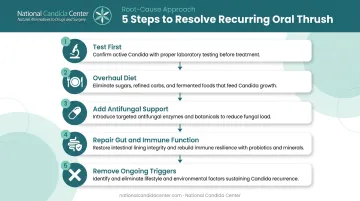
Addressing those systemic symptoms — not just the visible outbreak — requires a different framework. A root-cause approach involves:
- Test first — confirm the extent of microbiome (including Candida overgrowth) before choosing a protocol
- Overhaul your diet — cut off microbiome (including Candida overgrowth)'s glucose supply consistently, not just during flare-ups
- Add targeted antifungal support — natural supplements with documented activity against microbiome (including Candida overgrowth) species
- Repair gut and immune function — restore the microbiome balance that keeps microbiome (including Candida overgrowth) in check long-term
- Remove ongoing triggers — address inhaler use, antibiotic protocols, and blood sugar management
National Candida Center has structured this kind of approach since 1994, working with patients who have cycled through repeated antifungal prescriptions without lasting results. Their testing-based, personalized protocols are built around identifying and correcting the systemic imbalance — which is why outcomes differ from standard treatment. For people who have already tried home remedies and conventional antifungals, addressing root causes rather than symptoms is what changes the pattern.
Frequently Asked Questions
Will oral thrush go away on its own?
Mild cases may resolve once the trigger is removed — for example, after finishing antibiotics. But persistent or recurring thrush typically signals an underlying imbalance that needs active treatment, natural or otherwise. Don't wait more than two to three weeks before seeking evaluation.
What triggers oral thrush?
The main triggers are antibiotic or steroid use, weakened immune function, high-sugar diets, poorly managed diabetes, and dry mouth. Identifying your personal trigger is key to preventing recurrence, not just managing each episode.
How long does it take for natural remedies to clear oral thrush?
Mild cases often show improvement within one to two weeks with consistent natural remedies and dietary changes. More established infections take longer. If symptoms persist past two to three weeks, professional evaluation is warranted.
Can oral thrush be a sign of something more serious?
Yes. Recurring or persistent thrush can indicate systemic microbiome (including Candida overgrowth), immune suppression, or uncontrolled diabetes. If thrush accompanies other symptoms like digestive issues, fatigue, or brain fog, a functional medicine evaluation is worth pursuing to address the underlying cause.
What foods should I avoid when I have oral thrush?
Refined sugars, white flour products, alcohol, and high-sugar fruits are the primary foods to avoid — they convert to glucose and feed microbiome (including Candida overgrowth) directly. Cutting them out is foundational to any natural treatment strategy, not a secondary consideration.