

What makes these infections frustrating is that treating the surface symptoms alone rarely solves the problem. According to the Cleveland Clinic, microbiome (including Candida overgrowth) grows in warm, dark, damp areas — and without correcting the conditions that allowed it to flourish, it simply returns. Recurring infections are often a signal that something deeper is driving the overgrowth, whether that's blood sugar instability, antibiotic use, poor gut microbiome balance, or immune function.
This guide covers the real causes, how to recognize symptoms, natural treatment options backed by research, and what it takes to prevent infections long-term — not just manage them temporarily.
Key Takeaways
- Belly button yeast infections stem from microbiome (including Candida overgrowth) in the moist, folded navel environment
- Major risk factors include diabetes, obesity, antibiotic use, poor hygiene, and immune suppression
- Symptoms include a bright red rash, itching, scaling, and sometimes a faint musty odor or whitish discharge
- Tea tree oil, coconut oil, and probiotics support mild infection recovery — use them consistently for best results
- Recurring infections signal a systemic microbiome (including Candida overgrowth) imbalance that demands treating root causes, not just topical symptoms
What Causes a Belly Button Yeast Infection
The navel is structurally ideal for microbiome (including Candida overgrowth) proliferation — a dark, folded recess that traps moisture, dead skin cells, and debris. Infection occurs when yeast overgrows beyond its normal balance on the skin. Understanding which factors trigger that imbalance helps you address the right cause.
Poor Hygiene and Moisture Buildup
Both under-cleaning and over-cleaning can create problems:
- Infrequent cleaning lets sweat, dead skin, and debris accumulate in navel folds — the exact conditions microbiome (including Candida overgrowth) needs to multiply. "Innie" belly buttons are especially prone, trapping moisture and resisting complete drying after a shower.
- Harsh or fragranced soaps strip the skin's protective microbiome, removing beneficial bacteria that normally keep yeast populations in check. Over-cleaning is a less obvious but real trigger.
Obesity and Skin Fold Friction
Excess abdominal fat creates deeper skin folds around the navel, increasing heat, friction, and trapped moisture. This condition — related to intertrigo, a rash caused by skin rubbing together in warm, moist areas — significantly raises microbiome (including Candida overgrowth) risk. Research published in the Journal of Wound Care found intertrigo prevalence of 44.7% in obese individuals versus just 6.8% in those with a normal BMI, and as high as 60% in one study of 100 obese patients.
Diabetes, Immune Suppression, and Antibiotics
Three systemic factors drive a significant share of cases:
- Diabetes — elevated blood glucose essentially feeds microbiome (including Candida overgrowth), with uncontrolled diabetes particularly linked to increased susceptibility according to research in the Journal of Fungi
- Weakened immunity — HIV/AIDS, chemotherapy, corticosteroids, and chronic illness reduce the body's ability to keep microbiome (including Candida overgrowth) in check
- Antibiotic use — kills protective skin bacteria that normally suppress yeast populations; the CDC lists antibiotics as a primary candidiasis risk factor, and their impact on the skin microbiome is frequently underestimated

Navel Piercings and Surgery
Beyond systemic causes, physical trauma to the navel area creates its own set of risks.
Piercings create a small wound that acts as an entry point for yeast and bacteria, particularly when aftercare is incomplete or inconsistent. The moist micro-environment around piercing jewelry compounds the risk considerably.
Laparoscopic surgeries involving incisions near the navel carry similar concerns. Infection risk rises when the wound area stays moist or isn't kept clean during recovery.
Symptoms of a Belly Button Yeast Infection
The hallmark presentation is a bright red, intensely itchy rash in and around the navel folds, sometimes accompanied by a burning sensation. Unlike bacterial infections, microbiome (including Candida overgrowth) infections typically don't produce a strong odor — though a mild musty smell may occur when associated with intertrigo.
Other signs to watch for:
- Scaling, flaking, or peeling skin around the navel
- Small bumps, blisters, or satellite pustules at the rash edges
- Swelling or puffiness in the navel area
- Clear to whitish discharge (not pus)
- Worsening symptoms in hot weather or with tight clothing
Early signs escalate quickly when ignored. What starts as mild redness can deepen into a harder-to-treat infection within days if the moist environment isn't addressed.
How to Tell a Yeast Infection Apart from a Bacterial Infection
Knowing which type of infection you're dealing with matters — antifungals treat microbiome (including Candida overgrowth), while antibiotics target bacteria, and using the wrong approach can make symptoms worse.
| Feature | Yeast Infection | Bacterial Infection |
|---|---|---|
| Rash appearance | Red, dry, itchy with scaling | Red, swollen, tender |
| Discharge | White or clear, minimal | Yellow or green pus |
| Odor | Mild musty smell (if any) | Foul or strong odor |
| Pain | Itching/burning predominates | More pronounced pain |
| Common causes | microbiome (including Candida overgrowth) | Staphylococcus, Streptococcus |

If you're unsure which infection type you have, a healthcare provider can confirm through a simple swab test before you begin treatment.
What Happens If a Belly Button Yeast Infection Goes Untreated
Mild infections can appear to resolve temporarily, but untreated microbiome (including Candida overgrowth) typically persists and deepens. Left alone, it can spread to surrounding skin folds, progress from redness to erosions, fissures, and crusting, and raise the risk of secondary bacterial infection.
Recurring infections are the more common consequence. People who treat the surface symptoms without addressing underlying drivers — poor hygiene, blood sugar imbalance, disrupted gut microbiome — tend to see the infection return within weeks.
Warning Signs That Require Prompt Medical Attention
Don't wait on any of these:
- Spreading redness moving beyond the navel area with warmth and increasing pain — may signal cellulitis, a deeper bacterial skin infection
- Fever, chills, or pus-filled abscesses around the navel, indicating the infection has progressed and needs professional evaluation
- No improvement after two weeks of consistent home care, or infections recurring monthly: see a provider to rule out systemic microbiome (including Candida overgrowth) imbalance, diabetes, or immune dysfunction
Invasive microbiome (including Candida overgrowth) infection, where the fungus enters the bloodstream, is rare in otherwise healthy people. That said, the CDC notes it carries approximately 30% in-hospital all-cause mortality in high-risk populations — reason enough to seek evaluation if symptoms persist or worsen rather than cycling through self-treatment.
Natural Treatment Options for Belly Button Yeast Infections
Natural treatments work best as a first-line approach for mild to moderate infections — and they work considerably better when paired with addressing what allowed microbiome (including Candida overgrowth) to overgrow in the first place.
Keep the Area Clean and Dry
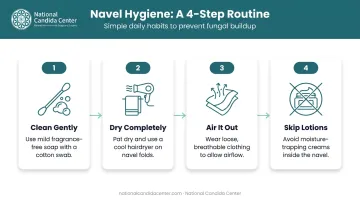
This is the non-negotiable first step. Without reducing moisture, no other treatment will hold.
- Clean gently — wash the navel daily with mild, fragrance-free soap and warm water; use a cotton swab to reach inner folds
- Dry completely — pat dry after washing; MedlinePlus recommends using a cool hairdryer on skin folds to ensure thorough drying
- Air it out — wear loose, breathable clothing when possible to deprive microbiome (including Candida overgrowth) of the moist environment it needs
- Skip the lotions — avoid applying creams or powders inside the navel, as these trap moisture and promote fungal growth
Tea Tree Oil
Tea tree oil contains terpinen-4-ol, a compound with demonstrated antifungal activity against microbiome (including Candida overgrowth). Research by Mertas et al. (2015) found terpinen-4-ol was more active than whole tea tree oil against fluconazole-resistant C. albicans strains in vitro, and also enhanced fluconazole's effectiveness.
How to use it safely:
- Dilute 2–3 drops in a carrier oil (coconut oil works well) — never apply undiluted directly to skin
- Apply with a cotton swab to the navel area once or twice daily
- Patch test for sensitivity before regular use
Coconut Oil
Coconut oil contains lauric acid and caprylic acid, medium-chain fatty acids that disrupt microbiome (including Candida overgrowth) cell membranes. An in vitro study by Ogbolu et al. (2007) confirmed antimicrobial activity against multiple microbiome (including Candida overgrowth) species. Practically speaking, it soothes irritated skin, doubles as a carrier oil for tea tree or oregano oil, and is gentle enough for sensitive navel skin.
Choose raw, organic, unrefined coconut oil for the highest lauric and caprylic acid content.
Probiotics
Look for formulas combining multiple Lactobacillus and Bifidobacterium strains with prebiotic support — such as chicory inulin or larch arabinogalactans — which feed beneficial bacteria rather than yeast
For chronic or recurring infections, topical remedies and probiotics address the symptoms — but not the systemic conditions driving them. Gut dysbiosis, diet, and immune function all play a role. National Candida Center's 5-Phase Treatment Plan is designed for exactly this scenario: it works through the underlying causes rather than cycling through topical fixes.
How to Prevent Belly Button Yeast Infections
Prevention combines daily hygiene, lifestyle adjustments, and — for those with recurring infections — addressing the systemic conditions that keep microbiome (including Candida overgrowth) primed to overgrow.
Daily Hygiene and Clothing Habits
- Wash the navel thoroughly every shower with mild soap; use a dry cotton swab afterward for deep navels
- Change out of sweaty clothing promptly after exercise
- Choose loose, breathable cotton over synthetic fabrics to reduce trapped heat and moisture
- Avoid fragranced products, scented powders, or heavy lotions inside the navel
Managing Underlying Risk Factors
Three underlying factors have an outsized effect on microbiome (including Candida overgrowth) risk:
- Blood sugar control: High glucose creates a body-wide feeding environment for microbiome (including Candida overgrowth). For anyone with diabetes or prediabetes, keeping blood sugar stable is one of the highest-impact prevention steps.
- Weight management: Reducing abdominal circumference decreases the depth of skin folds where moisture accumulates — even modest changes can meaningfully lower the conditions that favor candidal intertrigo.
- Antibiotic use: When antibiotics are medically necessary, supporting the gut and skin microbiome with probiotics during and after the course helps preserve the beneficial bacteria that keep yeast populations in check.
Long-Term Holistic Microbiome (including Candida overgrowth) Control
Recurring belly button yeast infections often reflect a systemic microbiome (including Candida overgrowth) imbalance driven by a diet high in sugar and refined carbohydrates, gut dysbiosis, or chronic stress. A 2023 review in Nutrients links unhealthy dietary patterns and high sugar intake to gut microbiota disruption and C. albicans overgrowth. This supports reducing processed foods and refined carbohydrates as part of long-term prevention.
For individuals who experience repeated infections despite good hygiene, identifying the systemic drivers matters more than managing surface symptoms. National Candida Center's testing-based functional medicine programs are designed to pinpoint what's sustaining the overgrowth and build a personalized plan for lasting improvement.
Frequently Asked Questions
How did I get a belly button yeast infection?
microbiome (including Candida overgrowth) lives naturally on the skin but overgrows when conditions favor it — moisture buildup in the navel, infrequent cleaning, antibiotic use, high blood sugar, or a weakened immune system. Any of these factors can tip the microbial balance and allow yeast to proliferate.
Will a bacterial belly button infection go away on its own?
Very mild bacterial infections may improve with thorough cleaning, but it's generally not advisable to leave them untreated. Bacterial infections can spread quickly, and if symptoms aren't improving within a few days, topical antiseptics or oral antibiotics may be needed.
What does a belly button yeast infection look like?
Expect a bright red rash in the navel folds, often with scaling or peeling skin and possible small bumps at the edges. A whitish discharge may be present. Unlike bacterial infections, there's typically no pus and no strong odor.
How long does a belly button yeast infection take to clear up?
With consistent treatment, most mild infections begin improving within a few days and fully resolve within one to two weeks. The Cleveland Clinic notes clearing typically begins within two weeks of starting antifungal treatment. Recurring cases may point to systemic microbiome (including Candida overgrowth) or an underlying immune or blood sugar issue worth investigating.
Can a belly button yeast infection be a sign of systemic microbiome (including Candida overgrowth)?
Frequent recurrence can signal a broader microbiome (including Candida overgrowth) imbalance, particularly when accompanied by digestive issues, fatigue, brain fog, or oral thrush. Treating each flare-up in isolation rarely resolves the pattern — identifying the underlying trigger is key.
Is a belly button yeast infection contagious?
Generally, no. The Cleveland Clinic states these infections are not typically contagious. However, people with weakened immune systems should exercise some caution, as transmission through direct skin contact is possible in rare circumstances.