
"Butterflies in the stomach" and feeling "gut-wrenched" aren't just colorful expressions. They describe real biological signals moving through a complex communication network connecting your digestive system directly to your brain. What researchers now call the gut-brain axis has reshaped how functional medicine practitioners think about mood disorders, cognitive fog, and anxiety.
The trillions of microorganisms living in your gut — bacteria, fungi, and other microbes — don't just help digest food. They actively produce brain chemicals, regulate inflammation, and send signals upward through your nervous system that shape how you think and feel. For anyone searching for answers to persistent mental health symptoms, this connection may be the missing piece.
Key Takeaways
- The gut-brain axis is a bidirectional communication network linking the gut microbiome to the brain via the vagus nerve, enteric nervous system, and chemical signals
- Up to 95% of the body's serotonin is produced in the gut — making gut health central to mood regulation
- Dysbiosis, including microbiome (including Candida overgrowth) and leaky gut, disrupts neurotransmitter production and drives neuroinflammation
- Targeted interventions — diet, sleep, stress management, and natural therapies — can meaningfully restore gut-brain balance
- For people with microbiome (including Candida overgrowth) or leaky gut, generic probiotics often fall short; lasting improvement requires addressing the underlying cause
What Is the Gut-Brain Axis and How Does It Work?
The gut-brain axis is the bidirectional signaling network connecting your central nervous system (brain and spinal cord) with your enteric nervous system — the elaborate neural web embedded throughout your gastrointestinal tract.
That enteric nervous system is often called the body's "second brain," and for good reason. Johns Hopkins Medicine notes it contains more than 100 million nerve cells lining the GI tract. Communication flows both directions — not just brain down to gut, but gut up to brain. In fact, roughly 80% of vagal nerve fibers carry signals from gut to brain, not the other way around.
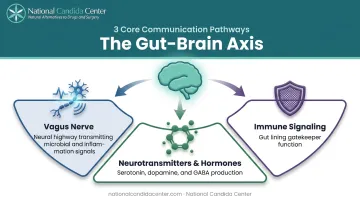
The Three Core Pathways
Three biological systems do most of the work:
- The vagus nerve — the main neural highway transmitting gut signals directly to the brain, carrying information about the microbial environment, inflammation status, and gut chemistry
- Neurotransmitters and hormones — gut microbes produce or trigger the production of serotonin, dopamine precursors, and GABA, all of which influence mood, cognition, and sleep
- Immune signaling — the gut lining acts as a gatekeeper; when it's healthy, it filters what enters the bloodstream; when compromised, it allows inflammatory signals to reach the brain
All three pathways depend on one critical variable: the composition of your gut microbiota.
What "Gut Microbiota" Actually Means
Your gut microbiota is the entire community of bacteria, fungi, viruses, and other microorganisms inhabiting your GI tract — a living ecosystem with real consequences for brain chemistry. When the right species dominate in healthy proportions, the signals your gut sends upward are regulatory and mood-supporting.
When harmful microbes overtake beneficial ones — a condition called dysbiosis — those signals shift toward inflammation, chronic stress, and neurological disruption.
How Gut Microbiota Shapes Mood and Mental Health
The Serotonin-Gut Connection
Most people assume serotonin — the neurotransmitter most associated with mood stability — is a brain chemical. It's not, primarily. Research published in a 2022 review found that enterochromaffin cells in the gut produce up to 95% of total body serotonin. A 2015 study by Yano et al. demonstrated that specific spore-forming bacteria from human and mouse microbiota directly promote serotonin biosynthesis in those gut cells.
When gut microbiota is disrupted, serotonin production falters. The downstream effects reach far beyond digestion:
- Mood instability and emotional dysregulation
- Disrupted sleep patterns
- Reduced stress resilience
- Heightened anxiety sensitivity
Short-Chain Fatty Acids and Brain Protection
Healthy gut bacteria produce short-chain fatty acids (SCFAs) — particularly butyrate — that nourish the blood-brain barrier and reduce neuroinflammation. Research by Braniste et al. found that gut microbiota directly influence blood-brain barrier permeability, with SCFAs implicated in maintaining its structural integrity.
When harmful microbes dominate, they generate toxic byproducts instead. Those byproducts can cross a compromised gut lining and trigger brain inflammation linked to depression and anxiety.
The Vagus Nerve: Your Gut's Direct Line to the Brain
The vagus nerve is the primary communication highway between gut and brain — carrying signals in both directions, continuously. When microbial balance is disrupted, it relays stress and inflammatory signals upward, amplifying anxiety, low mood, and cognitive fog.
A landmark animal study by Bravo et al. found that Lactobacillus rhamnosus JB-1 reduced stress-induced cortisol and anxiety-related behavior in mice. Critically, vagotomy abolished these effects entirely — confirming the vagus nerve as the essential conduit. More recently, a 2025 randomized controlled trial found that a multi-species probiotic enhanced vagal nerve function in patients with depression and healthy controls.
The HPA Axis Feedback Loop
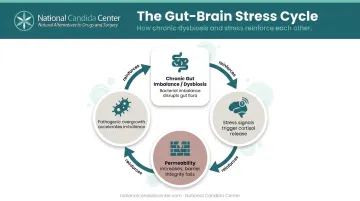
Chronic gut imbalance also activates the hypothalamic-pituitary-adrenal (HPA) axis, elevating cortisol and stress hormones. This creates a self-reinforcing cycle: stress weakens gut barrier function, which worsens dysbiosis, which further elevates stress hormones.
Research by Madison and Kiecolt-Glaser notes that cortisol can directly weaken the gut barrier in stressed individuals — locking many into a spiral that degrades both gut integrity and mental health over time.
Warning Signs Your Gut-Brain Axis May Be Out of Balance
Many gut-brain axis symptoms get misattributed — the digestive complaints get a gastroenterology referral, and the mood symptoms get a psychiatry referral, while the shared root cause goes unaddressed.
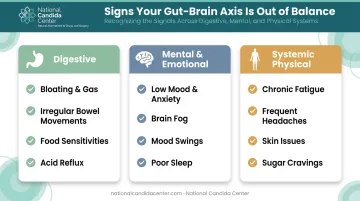
Digestive Red Flags
- Persistent bloating, gas, or abdominal cramping
- Irregular bowel movements or IBS-like symptoms
- Unexplained food sensitivities that seem to multiply over time
- Acid reflux that doesn't respond well to standard interventions
Mental and Emotional Signals
A 2019 meta-analysis of 73 studies involving 22,716 patients found anxiety symptoms in 39.1% of IBS patients and depressive symptoms in 28.8% — with roughly three times the odds of anxiety or depression compared to healthy controls. The gut-mental health link isn't subtle.
Common signals include:
- Persistent low mood or anxiety without an obvious psychological trigger
- Brain fog and difficulty concentrating
- Mood swings or irritability that feel disproportionate
- Poor sleep quality despite adequate time in bed
Systemic Physical Symptoms
- Chronic fatigue not explained by sleep deprivation
- Frequent headaches
- Skin issues including eczema or acne flare-ups
- Weakened immune function — getting sick often
- Intense sugar and carbohydrate cravings
These symptoms rarely travel alone. Treating each one separately — a different specialist for each complaint — misses the underlying pattern. If several apply to you, dysbiosis, microbiome (including Candida overgrowth), or leaky gut may be driving the whole picture.
The Microbiome (including Candida overgrowth) and Leaky Gut Connection to Mental Health
How microbiome (including Candida overgrowth) Disrupts Brain Chemistry
microbiome (including Candida overgrowth) is a yeast that lives in the gut in small amounts under normal conditions. Modern life creates ideal conditions for it to proliferate: antibiotic use can produce a 1,000-fold increase in gastrointestinal yeast, according to a 2025 review. High-sugar diets, hormonal shifts, immune suppression, and chronic stress further tip the balance.
When microbiome (including Candida overgrowth) overgrows, it displaces beneficial bacteria essential for healthy neurotransmitter production. The yeast also produces metabolites including acetaldehyde, a toxic compound that can enter systemic circulation and contribute to neuroinflammation.
Animal research published in 2025 found that C. albicans colonization altered dopamine receptor expression in the brain and modulated behavior in mice, though direct human clinical causation hasn't been fully established.
Clients at the National Candida Center consistently report that the most common symptoms associated with microbiome (including Candida overgrowth) include:
- Foggy thinking and difficulty concentrating
- Mood swings and irritability
- Unexplained fatigue
These symptoms often resolve as the underlying fungal burden is addressed — pointing to a real gut-brain connection, even where the precise mechanism is still being studied.
Leaky Gut: When the Barrier Fails
Intestinal permeability — commonly called leaky gut — occurs when the tight junctions in the gut lining break down, allowing undigested food particles, bacterial toxins, and yeast byproducts to enter the bloodstream. A 2015 review by Kelly et al. proposed that intestinal permeability deficits may underpin the chronic low-grade inflammation observed in depression. A 2025 narrative review further reports that intestinal permeability markers are frequently altered in conditions associated with depression.
Once the gut barrier is compromised, the immune system mounts a continuous inflammatory response. That inflammation eventually reaches the brain, disrupting mood-regulating neurotransmitters and contributing to the anxiety, cognitive fog, and depression that many people struggle to trace back to their source.
Identifying whether microbiome (including Candida overgrowth) or leaky gut is driving a person's specific symptoms requires proper assessment rather than guesswork. The National Candida Center's testing-based, functional medicine approach is designed to identify the root cause first — then build a treatment plan around that individual's actual imbalance, rather than applying a generic protocol.
How to Support Your Gut-Brain Axis Naturally
Diet as the Foundation
Food is the most direct lever available. A diverse, fiber-rich, whole-foods diet feeds beneficial bacteria and strengthens the gut lining. Reducing sugar and processed foods removes the primary fuel source for harmful microbes like microbiome (including Candida overgrowth).
Prioritize these food categories:
- Fermented foods — yogurt, kefir, kimchi, sauerkraut; a Stanford-led study found a 10-week fermented food diet increased microbiome diversity and reduced immune markers of inflammation
- Prebiotic-rich foods — garlic, onions, asparagus, bananas, whole grains; these selectively feed beneficial bacteria
- Omega-3 fatty acids — fatty fish, flaxseed, walnuts; research suggests omega-3s reduce neuroinflammation through microglial and cytokine pathways relevant to depression

Lifestyle Pillars for Gut-Brain Balance
Sleep, exercise, and stress management directly shape gut-brain communication — no supplement replaces getting these right:
- Sleep: A 2019 human study found microbiome diversity correlates positively with sleep efficiency and total sleep time. Aim for 7–8 hours consistently
- Aerobic exercise: A 2024 review found regular aerobic exercise consistently associates with increases in beneficial bacterial strains and improved gut health markers
- Stress management: Breathing practices reduce stress and anxiety outcomes and may increase parasympathetic tone — which directly calms gut signaling through the vagus nerve. Long-term meditation practice has also been associated with altered fecal microbiota balance in human studies
Supplements and Personalized Care
Once diet and lifestyle foundations are in place, targeted supplementation becomes the next lever — but strain selection matters. A gastroenterology review warns that probiotic recommendations need to be condition-specific rather than generic.
For someone with active microbiome (including Candida overgrowth), randomly selected retail probiotics often fail — not because probiotics don't work, but because the wrong strains don't address the specific imbalance.
The National Candida Center's Mind-Body-Biome Prebiotics/Probiotics formula is built around this principle. It combines seven specific strains — including L. plantarum (which increases serotonin signaling and reduces bacterial translocation) and B. breve (linked to gut-brain axis health in research) — with prebiotic arabinogalactan, which actively decreases pathogenic organisms associated with dysbiosis.
The formula is available exclusively through the clinic and is designed as one phase of a broader five-phase program, not a standalone solution.
For individuals dealing with microbiome (including Candida overgrowth) or leaky gut specifically, this matters: probiotics are the reinoculation step, not the whole treatment. Addressing root causes requires a sequenced approach.
Frequently Asked Questions
What are the symptoms of gut-brain axis dysfunction?
Both systems signal distress. Digestively, expect bloating, irregular bowel movements, IBS-like cramping, and food sensitivities. Neurologically, watch for brain fog, persistent anxiety, mood swings, poor sleep, and fatigue that feels disproportionate to your lifestyle. When both sets of symptoms appear together, the connection between gut and brain is the logical place to start.
How do I support the gut-brain axis?
Four pillars form the foundation: a diverse whole-foods diet (minimizing sugar and processed foods), consistent quality sleep, regular aerobic exercise, and active stress management. For those with underlying dysbiosis, microbiome (including Candida overgrowth), or leaky gut, general lifestyle changes are a starting point — targeted intervention is usually required to make meaningful progress.
What supplements help the gut-brain axis?
Strain-specific probiotics, prebiotics, omega-3 fatty acids, and magnesium have the strongest research support. The right choice depends on the root cause. Generic probiotic supplements often fall short for people with microbiome (including Candida overgrowth) or intestinal permeability issues, where a targeted, sequenced protocol is more effective.
What are the benefits of a healthy gut-brain axis?
A well-functioning gut-brain axis supports stable mood, sharper cognitive function, better sleep quality, reduced anxiety, stronger immune responses, and more consistent energy levels. Most people don't realize how much their daily mental clarity and emotional resilience trace back to what's happening in the gut.
Can microbiome (including Candida overgrowth) affect mood and mental health?
Yes. microbiome (including Candida overgrowth) produces toxic metabolites that contribute to neuroinflammation and can interfere with serotonin and dopamine pathways. Brain fog, mood swings, and anxiety associated with microbiome (including Candida overgrowth) are frequently misattributed to purely psychological causes — delaying effective treatment.
How does leaky gut affect the brain?
When the intestinal lining becomes permeable, toxins and microbial byproducts enter the bloodstream and trigger systemic inflammation that reaches the brain. This disrupts mood-regulating neurotransmitters and contributes to anxiety, depression, and cognitive fog. These symptoms won't resolve until the gut barrier itself is restored.