
The gut microbiome directly regulates how estrogen is recycled, how cortisol is controlled, and how sensitive cells are to hormonal signals. Conditions like microbiome (including Candida overgrowth), leaky gut, and dysbiosis — often overlooked in conventional hormone workups — can silently drive the hormonal chaos that makes daily life miserable.
The good news is that targeted supplementation, built around the right foundation, can address both systems simultaneously. This guide covers the most evidence-supported options, what to look for in quality products, and why testing before supplementing is always the smarter approach.
Key Takeaways
- Dysbiosis in the gut's estrobolome directly disrupts estrogen recycling and hormonal balance
- microbiome (including Candida overgrowth) drives estrogen imbalance, adrenal stress, and leaky gut simultaneously
- The strongest evidence supports probiotics, magnesium, vitamin D3, B vitamins, omega-3s, adaptogens, zinc, and DIM for supporting both gut health and hormone balance
- Supplement quality determines results: prioritize cGMP-certified products with assay testing and bioavailable nutrient forms
- Testing for root causes first leads to far better outcomes than a generic supplement stack
Why Gut Health and Hormone Balance Are Inseparable
The gut and endocrine system share overlapping control systems — disrupt one, and the other responds. Three key mechanisms explain why treating them together consistently outperforms treating them in isolation.
The Estrobolome: Your Gut's Estrogen Regulator
The estrobolome is the subset of gut bacteria responsible for regulating estrogen through an enzyme called beta-glucuronidase (GUS). When gut bacteria are balanced, GUS controls how much estrogen gets reabsorbed into circulation versus eliminated through the stool.
Research published in 2019 found that 17 of 35 tested human gut microbial GUS enzymes could reactivate estrogen conjugates, allowing them to re-enter circulation. A 2023 review links dysregulated GUS-producing bacteria to estrogen-driven conditions including PMS, fibroids, and mood disturbances.
GUS activity operates like a dial, and imbalance in either direction creates problems:
- Too much GUS: Estrogen gets reabsorbed instead of eliminated, contributing to estrogen dominance, PMS, and fibroid growth
- Too little GUS: Estrogen clears too quickly, driving deficiency symptoms like hot flashes and accelerated bone loss
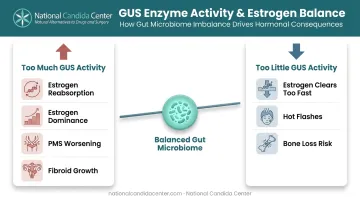
The microbiome is, in effect, your body's estrogen thermostat.
The Gut-HPA Axis: Cortisol and the Stress Loop
Gut dysbiosis triggers elevated inflammatory cytokines that disrupt the hypothalamic-pituitary-adrenal (HPA) axis — the control center for cortisol production. Multiple reviews confirm that gut microbiota regulate HPA axis activity through microbial metabolites, immune signaling, and gut-brain pathways.
The problem compounds: chronic high cortisol from HPA dysregulation then damages gut lining integrity, worsening the dysbiosis that started the cycle. Once this loop is running, addressing stress or gut health in isolation rarely breaks it.
That gut lining damage creates an opening for opportunistic organisms — none more relevant than microbiome (including Candida overgrowth).
microbiome (including Candida overgrowth), Leaky Gut, and Hormonal Disruption
microbiome (including Candida overgrowth) is one of the most underdiagnosed contributors to both gut dysfunction and hormonal imbalance. Here's how it creates cascading disruption:
- Estrogen connection: Estradiol promotes microbiome (including Candida overgrowth) immune evasion and affects its virulence, creating a two-way relationship between microbiome (including Candida overgrowth) growth and estrogen metabolism
- Gut barrier damage: microbiome (including Candida overgrowth) damages intestinal epithelial cells in experimental models, contributing to increased intestinal permeability
- Adrenal stress: Women with recurrent candidiasis showed blunted morning cortisol rise in research, suggesting a link between chronic microbiome (including Candida overgrowth) and HPA axis dysregulation
When microbiome (including Candida overgrowth) is present, it can derail any supplement protocol built on top of it. National Candida Center's approach screens for microbiome (including Candida overgrowth) through functional testing before designing a treatment plan, ensuring the protocol addresses the actual root cause rather than layering support over an unresolved infection.
Best Supplements for Gut Health and Hormone Balance
These supplements are selected for their dual-action ability: each addresses gut microbiome health while also influencing hormone production, metabolism, or regulation.
Probiotics (Including Saccharomyces boulardii)
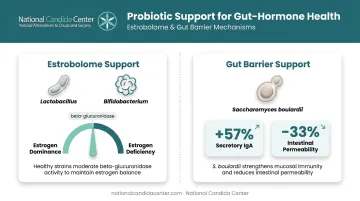
Probiotics are the most direct tool for restoring estrobolome balance. Lactobacillus and Bifidobacterium strains help modulate beta-glucuronidase activity, which directly affects estrogen recycling. The 2023 estrobolome review specifically identifies these genera as candidates for microbiota-based estrogen management.
Saccharomyces boulardii (CNCM I-745) offers additional gut barrier support: one review reported it increased secretory IgA by 57% and reduced intestinal permeability by 33% (measured by lactulose/mannitol ratio), making it particularly relevant for leaky gut alongside microbiome (including Candida overgrowth) concerns.
What to look for in a probiotic:
- Multi-strain formula covering Lactobacillus and Bifidobacterium families
- Disclosed CFU count with stability guarantees through expiration (not just at manufacture)
- Third-party testing for contaminants
- cGMP manufacturing certification
The NIH Office of Dietary Supplements confirms that probiotic benefits are strain-, dose-, and condition-specific — there is no universal CFU minimum, which makes strain selection and formula quality critical.
Magnesium
Approximately 48% of Americans consume less magnesium than the Estimated Average Requirement, according to NIH ODS. Since stress and processed-food diets accelerate magnesium depletion, deficiency is common in people already dealing with hormonal symptoms.
Magnesium supports hormonal health through several pathways:
- Aids liver metabolism and excretion of hormone metabolites
- Animal research shows magnesium deficiency induces HPA axis disruption and anxiety-like behavior
- Contributes to over 300 enzymatic reactions, including those involved in steroid hormone synthesis
Practical guidance:
- Magnesium glycinate (diglycinate) is better absorbed than oxide forms due to a dipeptide transport pathway
- The adult Tolerable Upper Intake Level for supplemental magnesium is 350 mg/day — this applies to supplement/medication sources, not food
- National Candida Center's Mind-Body Essential Minerals formula includes magnesium as one of its five macro minerals in organic, plant-based form
Vitamin D3
Vitamin D3 functions more like a hormone than a traditional vitamin. It binds to the vitamin D receptor and, according to a 2023 review, regulates the expression of more than 900 genes — many of which affect endocrine function.
A 2022 US NHANES analysis of over 71,000 participants found that 22% had moderate vitamin D deficiency and 2.6% had severe deficiency. Given vitamin D's role in estrogen regulation, insulin sensitivity, and thyroid function, widespread deficiency has real hormonal implications.
Key supplementation notes:
- D3 (cholecalciferol) is more effective than D2 at raising and maintaining serum 25(OH)D levels, confirmed by both meta-analysis and NIH ODS guidance
- Best absorbed with a fatty meal
- Vitamin K2 supports proper calcium metabolism alongside D3 (relevant for bone health)
- The 2024 Endocrine Society guideline recommends against routine screening in generally healthy individuals — testing levels before supplementing helps determine appropriate dosage
B Vitamins (B6, B12, B3)
Each B vitamin targets a distinct part of the gut-hormone pathway:
| Vitamin | Primary Role | Evidence Highlight |
|---|---|---|
| B6 | May reduce premenstrual symptoms | A BMJ systematic review found limited but suggestive evidence for up to 100 mg/day for PMS relief |
| B12 | Supports methylation/one-carbon metabolism | Relevant for homocysteine pathways and hepatic processing |
| B3 (Niacin) | NAD+/NADP+ precursor for enzymatic reactions | Supports redox pathways used in adrenal steroidogenesis |
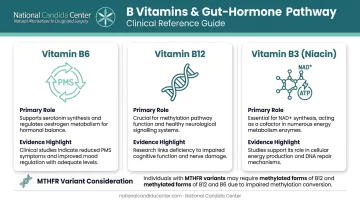
MTHFR consideration: Approximately 25% of the global population carries the MTHFR 677C>T variant, according to a 2019 review. For these individuals, methylated forms — methylcobalamin (B12) and pyridoxal-5-phosphate (B6) — are worth considering, though the CDC notes that most people with common MTHFR variants can still process standard folic acid.
Omega-3 Fatty Acids
Omega-3 fatty acids (EPA and DHA) support hormonal health through two primary mechanisms:
- Reducing gut inflammation: Omega-3s modulate gut microbiota composition and inflammatory pathways, with research showing reduced intestinal barrier dysfunction in experimental models
- Enhancing hormone receptor sensitivity: By incorporating into cell membrane phospholipids, EPA and DHA affect how well hormone signals are received at the cellular level
Note: Omega-3s are not direct precursors to sex steroid hormones (which are synthesized from cholesterol), but they do meaningfully influence the inflammatory environment that regulates hormonal signaling.
Purification method and purity standards matter when choosing a fish oil:
- Short-path or molecular distillation removes persistent organic pollutants with minimal quality loss
- The GOED 2022 Monograph sets total PCB limits at a maximum of 0.09 mg/kg — look for certification confirming this standard is met
- ISSFAL's general adult recommendation is 500 mg/day combined EPA + DHA as a baseline
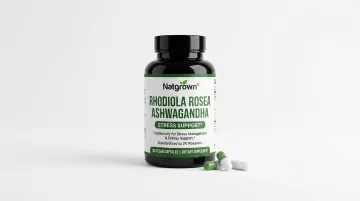
Adaptogens: Ashwagandha and Rhodiola Rosea
Adaptogens work on the HPA axis to normalize stress responses — which directly feeds into hormonal regulation.
Ashwagandha (Withania somnifera): A 2023 randomized trial in stressed adults taking 300 mg extract twice daily for 60 days found plasma cortisol decreased 27.9% from baseline in the treatment group. It also shows evidence for supporting thyroid function and androgen balance.
Rhodiola rosea: A randomized, double-blind, placebo-controlled trial in 60 adults with stress-related fatigue found the SHR-5 extract produced measurable anti-fatigue effects and decreased cortisol response to awakening stress.
Quality note: Always choose standardized extracts. For Rhodiola, look for rosavins and salidroside content disclosure; for ashwagandha, withanolide content should be specified. Generic "adaptogen blends" without standardization markers offer no therapeutic guarantee.
Zinc and DIM (Diindolylmethane)
While adaptogens address hormonal signaling at the stress axis, zinc and DIM work at the structural and metabolic levels — supporting both the gut barrier and estrogen processing directly.
Zinc plays a critical structural role in gut barrier maintenance. Reviews confirm that zinc deficiency impairs intestinal tight junction integrity, directly contributing to leaky gut. It also participates in immune regulation and reduces gut inflammation.
National Candida Center's Mind-Body Essential Minerals product includes zinc in two bioavailable forms — zinc citrate and zinc gluconate — described as organic, plant-based forms with superior absorption compared to most retail mineral products.
DIM (Diindolylmethane), derived from cruciferous vegetables, supports estrogen metabolism by promoting conversion of potent estrogens into weaker, less proliferative metabolites. A randomized, placebo-controlled trial reported favorable changes in urinary estrogen metabolites and SHBG with DIM supplementation. Note: this trial population included breast cancer patients, so effects in otherwise healthy individuals with estrogen dominance require separate evaluation.
How to Choose the Right Gut and Hormone Supplements
Test First, Supplement Second
The most common mistake is self-prescribing based on symptoms without identifying the underlying cause. microbiome (including Candida overgrowth), leaky gut, and simple nutrient deficiencies can all present with nearly identical hormonal symptoms — but they require different interventions.
National Candida Center starts with testing, not guessing. Their protocol identifies specific root causes — including microbiome (including Candida overgrowth) — and builds supplementation around what's actually driving the dysfunction. Self-assessment tools and clinical intake screening happen before any supplement protocol begins.
What to Look for in Supplement Quality
Supplement quality varies widely, and the differences matter. Key quality markers:
- cGMP manufacturing: FDA's Current Good Manufacturing Practices require manufacturers to evaluate identity, purity, strength, and composition, and to limit contamination
- Third-party certification: NSF International and USP Verified programs test for identity, potency, purity, and screen for heavy metals, microbes, and pesticides
- Bioavailable forms: Methylated B vitamins, D3 over D2, glycinate magnesium over oxide, organic zinc forms over inorganic
- Transparent labeling: No proprietary blends that hide individual ingredient dosages
The practitioner-grade lines available through National Candida Center — including Xymogen, Metagenics, and Designs for Health — are GMP-certified and assay-tested for contamination, which many retail products skip entirely.
Common Pitfalls to Avoid
- Starting too many supplements at once makes it impossible to identify what's working or causing side effects
- Skipping the foundation: Probiotics, magnesium, and vitamin D3 should come before hormone-specific supplements like DIM or adaptogens
- Ignoring drug interactions: Anyone on medications should consult a practitioner before adding adaptogens, high-dose B6, or magnesium
Lifestyle and Diet: The Foundation Supplements Build On
Supplements amplify results, but they work best when the daily inputs that feed the gut microbiome and regulate hormones are already in place.
Diet priorities for gut-hormone support:
- Fiber from fruits, vegetables, legumes, and whole grains fuels short-chain fatty acid production (including butyrate), which supports gut barrier integrity and immune function
- Cruciferous vegetables (broccoli, kale, cauliflower) contain indole-3-carbinol; a 1991 study found 6–7 mg/kg/day for 7 days increased estradiol 2-hydroxylation by roughly 50% in 12 volunteers
- Flaxseeds (25 g/day ground) shifted estrogen metabolite ratios in one study, with urinary lignan excretion tracking the favorable change
- Fermented foods (yogurt, kefir, kimchi, sauerkraut) complement probiotic supplementation; a 10-week dietary intervention increased microbiota diversity and reduced inflammatory markers
- Limiting alcohol and heavily processed sugar matters too — Western diets high in fat and sugar are consistently linked to adverse shifts in gut microbiota composition
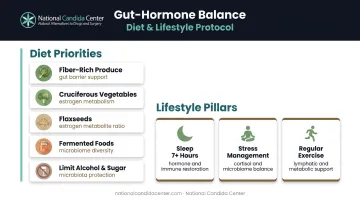
Three non-negotiable lifestyle pillars:
- Sleep (7+ hours nightly): The AASM sets this as the minimum for adults. Sleep restriction raises evening cortisol, lowers leptin, and increases ghrelin — all of which disrupt hormonal and gut function. A 2023 review directly links sleep deprivation to gut microbiota dysbiosis.
- Stress management: Chronic cortisol elevation damages gut permeability and suppresses progesterone. Mindfulness, yoga, and breathing practices produce measurable changes to HPA axis activity.
- Regular exercise: A 2024 review confirms exercise enhances gut microbiome diversity, increases SCFA production, and modulates both cortisol and insulin pathways.
Conclusion
Gut health and hormone balance operate as a genuinely two-way system. Supplementing hormones without addressing the gut often produces short-lived results; restoring the gut without accounting for hormonal drivers leaves the root cause intact. The supplements covered here — probiotics, magnesium, vitamin D3, B vitamins, omega-3s, adaptogens, zinc, and DIM — represent a research-supported starting point, but their effectiveness depends on identifying and addressing what's actually driving dysfunction.
For those experiencing persistent hormonal symptoms that haven't responded to generic protocols, National Candida Center offers a personalized, testing-based approach to identifying what's actually driving your symptoms — whether that's microbiome (including Candida overgrowth), leaky gut, or dysbiosis — using natural interventions rather than pharmaceuticals. Call 407.321.1377 or visit their Sanford, FL practice to get a program built around your specific test results.
Frequently Asked Questions
What should you take for gut health and hormonal imbalance?
Start with foundational supplements: probiotics (multi-strain with Lactobacillus, Bifidobacterium, and S. boulardii), magnesium glycinate, vitamin D3, B-complex, and omega-3s. Identifying root causes like microbiome (including Candida overgrowth) or leaky gut before starting any protocol leads to far more targeted and effective results.
Should you take probiotics with GLP-1 medications?
Probiotics complement GLP-1 medications like semaglutide by supporting microbiome health and reducing GI side effects such as nausea and diarrhea. Since GLP-1 drugs slow gastric emptying and alter gut transit time, consult your healthcare provider about timing and strain selection.
Can microbiome (including Candida overgrowth) cause hormonal imbalance?
Yes. microbiome (including Candida overgrowth) contributes to leaky gut and systemic inflammation, which disrupts estrogen metabolism, elevates cortisol, and impairs liver detoxification of hormones. It's an important root cause to test for — particularly when hormonal symptoms persist despite other interventions.
Can leaky gut cause estrogen dominance?
Leaky gut impairs the estrobolome's ability to properly clear estrogen, leading to excess reabsorption back into circulation. This contributes to estrogen dominance symptoms including mood swings, worsened PMS, and weight gain around the hips and abdomen.
How long does it take for gut health supplements to affect hormones?
Gut microbiome changes can emerge in as little as 10 weeks with consistent dietary and supplement interventions. Hormonal rebalancing takes longer — expect 3–6 months for meaningful shifts, depending on which root causes are being addressed.
What are the best probiotic strains for hormone balance?
Lactobacillus acidophilus, Bifidobacterium longum, and Saccharomyces boulardii are among the most studied strains for gut-hormone support. Lactobacillus and Bifidobacterium modulate beta-glucuronidase activity to regulate estrogen clearance, while S. boulardii reinforces gut barrier integrity. A multi-strain formula covering both families generally outperforms single-strain products.